



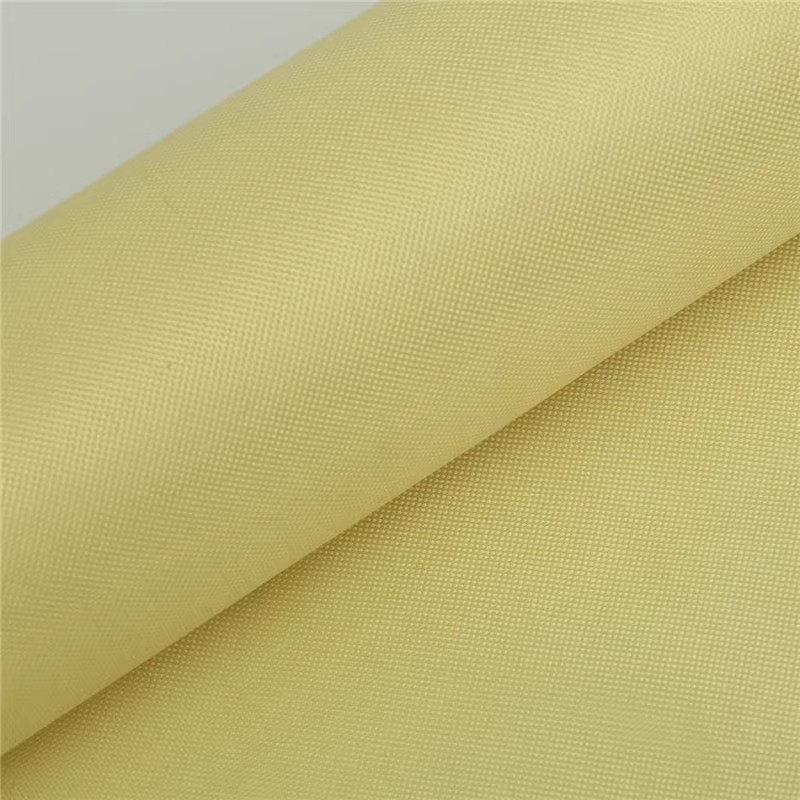
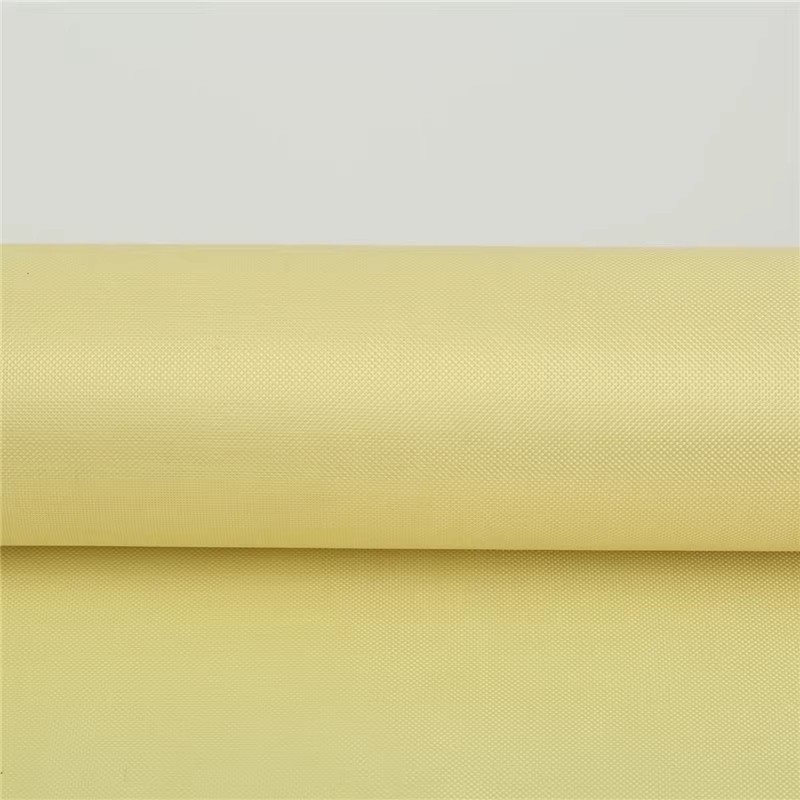
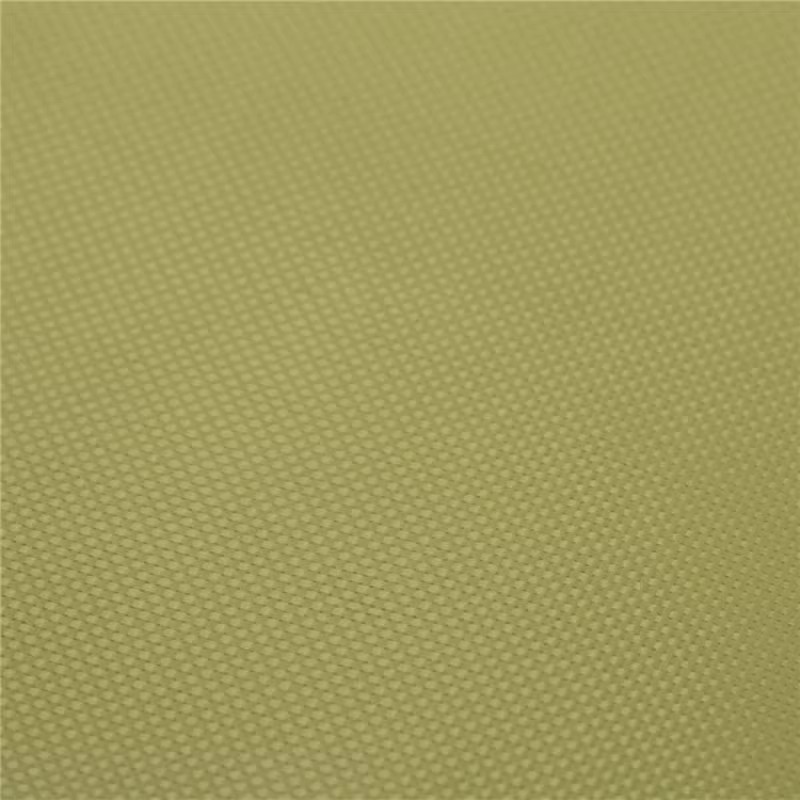
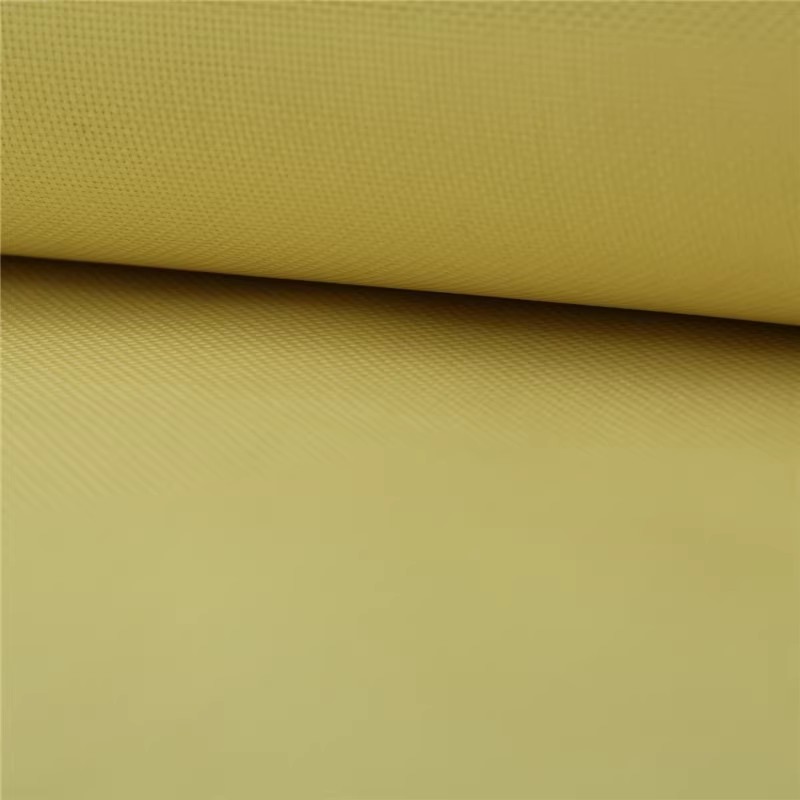
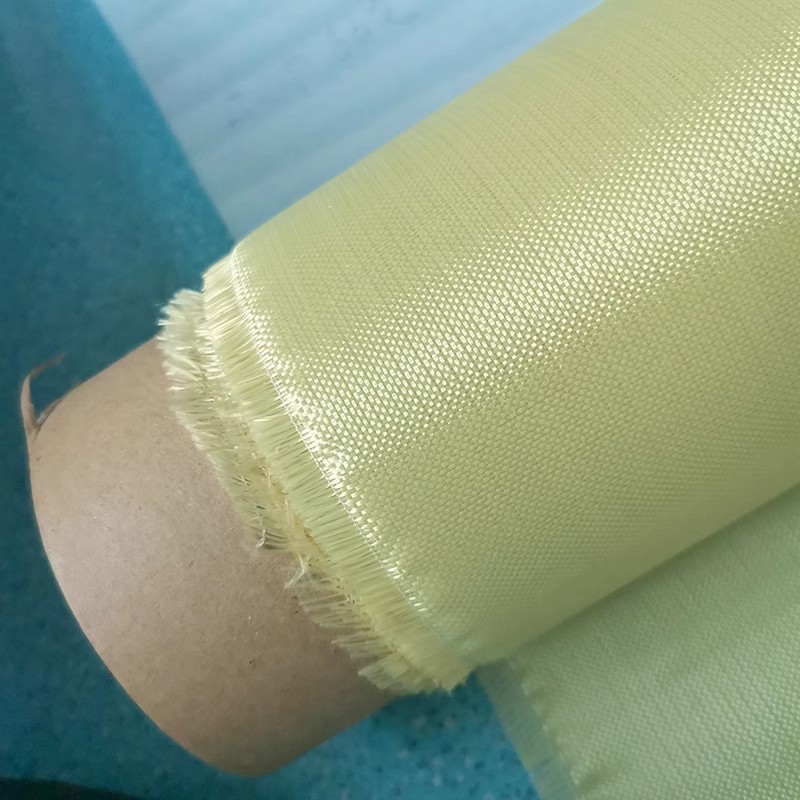
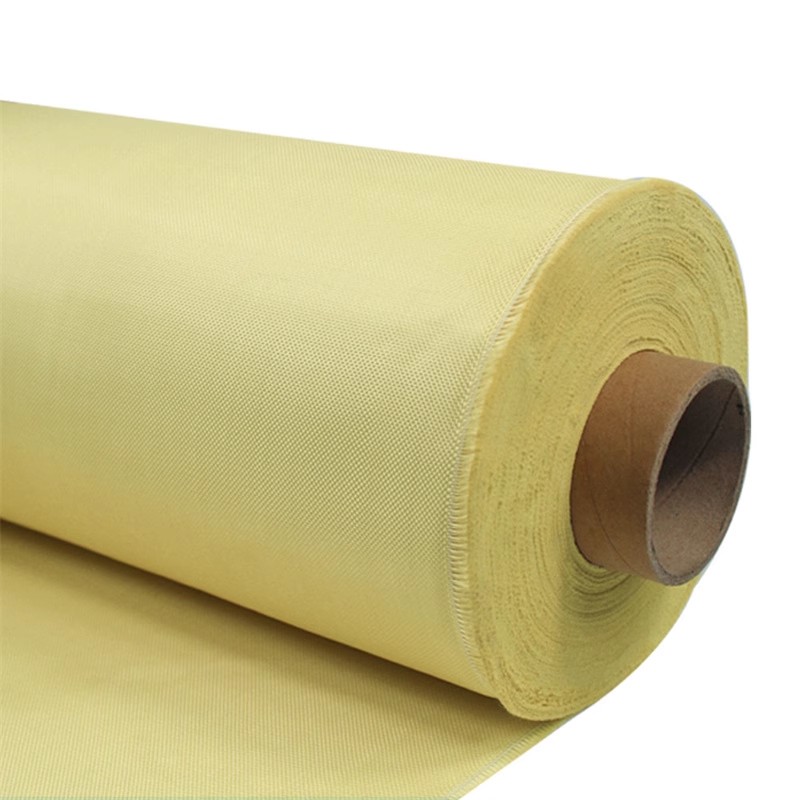
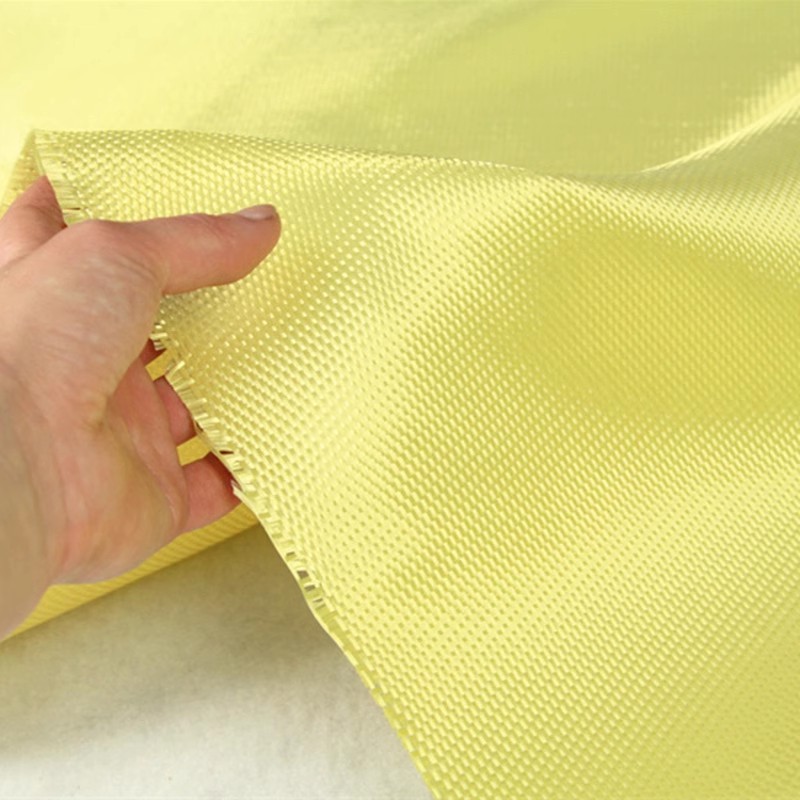
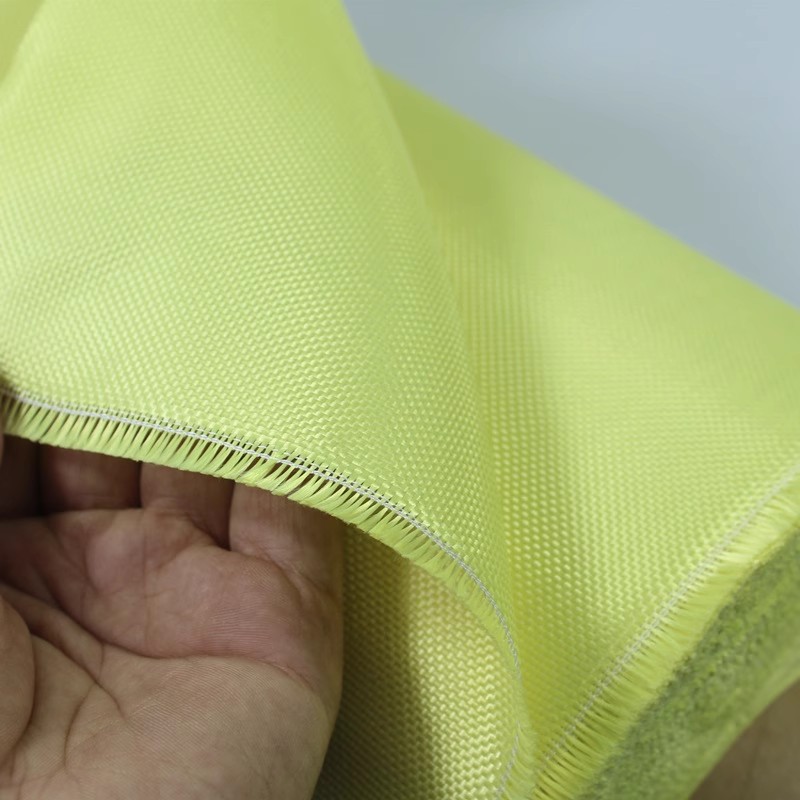
Unser Unternehmen verwendet originale, importierte Rohstoffe wie KEVLAR-Fasern der Typen K29, K49, K29AP, K100 usw. aus den Vereinigten Staaten und webt aus diesen Rohstoffen Gewebe, die bessere physikalische und chemische Eigenschaften aufweisen als solche, die aus Para-Aramid-Fasern anderer Marken gewebt werden.
Was ist ein Gewebe aus langen Kevlar-Fasern?
Die flammhemmende Aramidfaser (bekannt als Aramid-1414-Faser) ist eine flammhemmende Faser, die sich durch Hitzebeständigkeit, hohe Festigkeit, hohe Verschleißfestigkeit, gute Flexibilität, geringe Schrumpfung, eine stabile chemische Struktur sowie die Tatsache auszeichnet, dass sie beim Verbrennen keine Schmelztropfen bildet und keine giftigen Gase freisetzt.
Das aus flammhemmenden Aramidfasern gewebte Gewebe weist eine gute Dimensionsstabilität auf und kann über einen langen Zeitraum bei einer Temperatur von 250 Grad Celsius eingesetzt werden, wobei die thermische Schrumpfrate lediglich 1% beträgt. Die Erweichungstemperatur der Faser beträgt 373 Grad Celsius, und sie beginnt erst bei Temperaturen über 400 Grad Celsius zu zersetzen. Während der Zersetzung verdickt sich die Gewebeoberfläche, die Fasern dehnen sich aus, und die Temperatur außerhalb der Gewebeoberfläche beträgt 900–1300 Grad Celsius, wodurch die Wärmeübertragung isoliert wird, ohne dass Risse entstehen.
Gewebe aus ungedrehten Aramid-Rovings bestehen hauptsächlich aus Aramid-1414-Filamenten, die sich aus parallel angeordneten Primärfasern oder parallel gebündelten Einzelfasern zusammensetzen. Der Durchmesser der einzelnen Aramidfasern, die zur Herstellung von Rovings verwendet werden, liegt zwischen 5 und 15 μm und ist nicht einheitlich. Die Feinheit des ungedrehten Grobsgarns reicht von 1000# bis 8000# (tex). Ungedrehtes Grobsgarn kann direkt in bestimmten Verarbeitungsverfahren für Verbundwerkstoffe eingesetzt werden, beispielsweise bei Spezialtextilien, der Vorimprägnierung von Platten, der Rohrwicklung, der Profilextrusion usw. Ungezwirntes Garn kann aufgrund seiner gleichmäßigen Spannung zu ungezwirntem Grobgewebe und speziellen Aramidgeweben verwoben werden, die in speziellen Branchen wie der Luft- und Raumfahrt, der Landesverteidigung und der Rüstungsindustrie zum Einsatz kommen.
Dazu gehören vor allem:
- Kevlar-Gewebe
1.1. Leichtes Aramid-Gewebe in Leinwandbindung, kugelsicheres Gewebe;
1.2. Aramid-Gewebe ohne Schussfäden, auch bekannt als UD-Kugelsicherungsgewebe;
Es wird hauptsächlich für Materialspäne für kugelsichere Bekleidung, Materialien für kugelsichere Helme und kugelsichere Einsätze verwendet. Seine kugelsichere Leistung entspricht den Standards der Stufen 2 und 3 des Ministeriums für öffentliche Sicherheit sowie den Standards von Nijiia, Nijii und Nijii in den Vereinigten Staaten.
Die Spezifikationen der kugelsicheren Materialien lauten wie folgt:
1.2.1. Material der kugelsicheren Kleidung:
1.2.1.1. Aramid-UD-Gewebe 220 g/Quadratmeter, Ministerium für öffentliche Sicherheit, Stufe 2, 28. Etage, Ministerium für öffentliche Sicherheit, Stufe 3, 32. Etage, USA Nijiia, 24. Etage, Nijii, 20. Etage, Nijiii, 24. Etage sowie kugelsichere Steckplatte (Borcarbid)
1.2.2.2. UD-Gewebe aus Polyethylen mit ultrahohem Molekulargewicht, 135 g/m², Ministerium für öffentliche Sicherheit, Stufe 2: 46 Schichten, Ministerium für öffentliche Sicherheit, Stufe 3: 62 Schichten, amerikanisches Nijiia: 30 Schichten, Nijiii: 30 Schichten + kugelsichere Einlage (Borcarbid)
1.2.2. Material des kugelsicheren Helms:
1.2.2.1 Dichte des Kevlar- oder Nylongewebes: 230–510 Gramm; der selbst entwickelte kugelsichere Klebstoff kann direkt aufgebracht werden.
1.2.2.2. Aramid-UD-Gewebe (speziell für die Herstellung von kugelsicheren Helmen und Platten) Dichte: 230 Gramm pro Quadratmeter
Die oben genannten Produkte kommen im Bereich der Schutzausrüstung zum Einsatz: weiche Schutzwesten; kugelsichere Helme; explosionsgeschützte Decken; sowie explosionsgeschützte Arbeitsplätze. 220 g Aramid-UD-Gewebe, KEVLAR-Vlies, flammhemmendes UD-Gewebe, Schutzweste aus durchstoßfestem Material
Gewicht: 220 Gramm
Türbreite: 160 cm
Verpackung: 320 cm lang, wird in der Regel in Rollen versandt, kann aber auch gefaltet versandt werden.
Anwendungsbereiche: Spezialuniformen, kugelsichere Westen, Taschen, gepanzerte Fahrzeuge, Flugzeuge
1.2.3. Aramid-UD-Gewebe weist folgende Eigenschaften auf:
1.2.3.1. Hohe Temperaturanpassungsfähigkeit
1.2.3.2. Kugelsicher und stoßfest;
1.2.3.3. Schnittfest und verschleißfest; mit gewöhnlichen Haushaltsscheren lässt sich das Material nicht schneiden
1.2.3.4. Hoher Elastizitätsmodul und hohe Stabilität.
1.2.3.5. Hohe Zugfestigkeit und geringe Dehnung.
1.3. Unidirektionales Aramidgewebe, das in Situationen eingesetzt wird, in denen eine hohe Festigkeit in einer einzigen Richtung bei 0 Grad Längengrad oder 90 Grad Breitengrad erforderlich ist, wie z. B. bei strukturellen Reparaturen, erdbebensicherer Verstärkung, Gebäudeverstärkung, Brückenverstärkung usw.;
1.4. Dekoratives Aramidgewebe kann auch zu Aramid-Köpergewebe und farbigem Aramidgewebe gewebt werden.
2. Aramid-Vliesstoff, Filzbahn, Aramidpapier, zur Isolierung und Dämmung
Aramid-Vliesstoff ist eine Art Vliesstoff, der aus miteinander verklebten Fasern besteht. Wie gewöhnliche Vliesstoffe wird er im Produktionsprozess in einem Arbeitsgang hergestellt und erfordert weder Zieh- noch Spinnverfahren!
Die Verwendung von Aramid-Vliesstoff:
2.1. Aramid-Vliesstoff ist eine Art Vliesstoff, der aus Aramidfasern hergestellt wird.
2.2. Die wichtigsten Eigenschaften von Aramid-Vliesstoffen sind Isolierung und Wärmespeicherung.
2.3. Aramid-Vliesstoffe können für Heimtextilien verwendet werden, insbesondere für den Hausgebrauch, wo Aramid-Vliesstoffe zum Einsatz kommen!
2.4. Aramid-Vliesstoff wird aufgrund seiner zarten Struktur und seiner hautfreundlichen Eigenschaften häufig als Futter für eng anliegende Kleidung verwendet!
2.5. Aramid-Vliesstoffe können auch als Textilien für den Medizin- und Gesundheitsbereich eingesetzt werden!
2.6. Aramid-Vliesstoff ist ungiftig und hat keine Nebenwirkungen. Er kann als Aufbewahrungsbox, Verpackungsbox usw. verwendet werden!
3. Feinmaschiges, verdrehtes Aramidfasergewebe, Aramidgewebe, hauptsächlich aus Aramid 1313 oder einer geringen Menge an 1414-Kurzfasern
3.1. Unter „verzwirnter feiner Aramidfaser-Gaze“ versteht man hauptsächlich verschiedene Gewebe, die durch Verzwirnen von Aramid 1313 oder einer geringen Menge an 1414-Kurzfasergarn gewebt werden. Sie werden vor allem in Bereichen wie Brandschutz und Flammschutz eingesetzt. Die Eigenschaften eines Gewebes werden durch die Fasereigenschaften, die Kett- und Schussdichte, die Garnstruktur und die Textur bestimmt. Die Kett- und Schussdichte wird durch die Garnstruktur und die Textur bestimmt. Die Kombination aus Kett- und Schussfäden sowie der Garnstruktur bestimmt die physikalischen Eigenschaften eines Gewebes, wie beispielsweise Gewicht, Dicke und Bruchfestigkeit. Es gibt fünf grundlegende Webmuster: Leinwandbindung, Köperbindung, Satinbindung
3.2. Gedrehte Aramidbänder werden in gewebte Kantenbänder (glatte Kantenbänder) und nicht gewebte Kantenbänder (raue Kantenbänder) unterteilt. Das Hauptwebverfahren ist die Leinwandbindung. Sie werden zur Herstellung von Bauteilen für elektrische Geräte mit hoher Festigkeit und guten dielektrischen Eigenschaften sowie von Kfz-Schläuchen verwendet.
3.3 Aramid-Vorhanggewebe, auch als verdrehtes unidirektionales Aramidgewebe bekannt, wird durch Imprägnierung mit Klebstoff hergestellt. Es zeichnet sich durch eine hohe Festigkeit in Kettrichtung (0 Grad) oder Schussrichtung (90 Grad) aus. Das unidirektionale Kettgewebe ist ein Vier-Kett-Satin oder ein Längsachsen-Satin, das aus groben Kett- und feinen Schussgarnen gewebt wird und für Flugzeugreifen sowie hochwertige Automobilreifen verwendet wird.